

Why Poland is cutting benefits for Ukrainian refugees and who will be hit hardest – NV analysis
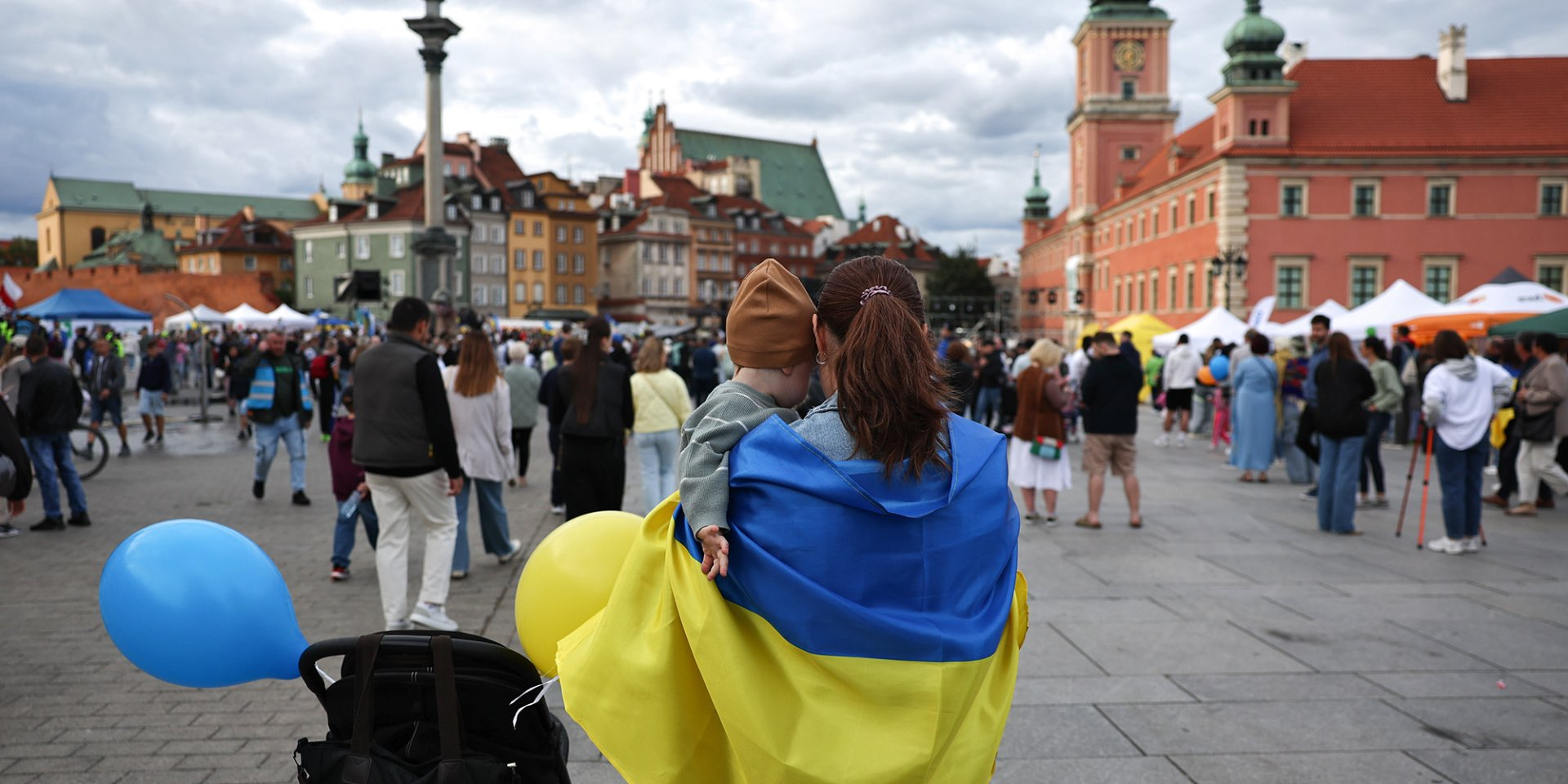
In Poland, almost 1 million Ukrainians live under temporary protection, so the latest innovations worry them (Photo: Anadolu via Reuters/Jakub Porzycki)
Polish President Karol Nawrocki outlined which forms of aid Ukrainian refugees should not receive, linking the issue to Polish national interests and what he called a need to restore “basic fairness,” in recent remarks on March 1.
Kyiv native Margarita Mykhailova, who arrived in Poland in April 2023 with her 8-year-old daughter and 11-year-old son and now lives in Warsaw, is bracing for another round of changes in her family’s life.
The wait will not be long — until March 5. From that date, under a new law signed in mid-February by Polish President Karol Nawrocki, a number of social benefits for Ukrainians will be scrapped and stricter legalization rules introduced.
“For now, the children and I are somehow managing, I’m trying to earn money,” Mykhailova said. “But what comes next? Will we be able to clear all these new bureaucratic hurdles?”
Local authorities insist that the most important support mechanisms for Ukrainians will not disappear but will instead be incorporated into the law on providing protection to foreigners. Nawrocki, meanwhile, has justified his initiative as caring for Polish citizens, ending a period of unconditional privileges and “restoring basic fairness.”
Nearly 1 million Ukrainian citizens are living in Poland under temporary protection, and the changes are causing widespread anxiety.

Uncertainty breeds fear
Experts interviewed by NV said official Warsaw is deliberately moving toward tightly linking social assistance to employment for foreigners. This has already affected Ukrainian refugees: one-time payments of 300 zlotys ($75) were scrapped in the summer of 2024. To receive 800 zlotys ($200) per child under the Rodzina 800+ program, applicants must prove professional activity. A key criterion is the ability to pay pension and disability insurance contributions — for free medical treatment, rehabilitation and prosthetics — amounting to at least half of Poland’s minimum wage.
Describing the situation, Warsaw-based journalist and migration researcher Olena Babakova said there is little state support even for Polish citizens, let alone foreigners.
“Since the start of the full-scale war with Russia, those who felt relatively comfortable in Poland were people who immediately started working — often in lower-skilled jobs than in Ukraine — or those who came to stay with relatives and later found employment,” she said.

In addition to child benefits, Ukrainian refugees still have the right to free public health care on par with Polish citizens. But from March 5, they will need employer-provided insurance or to register as unemployed with a job center for the state to cover contributions.
“Of course, people can voluntarily pay into the National Health Fund or buy private insurance,” said legalization expert Serhii Pekh. “Or they can pay out of pocket for every doctor’s visit, test and treatment if they are uninsured.”
Under the new law, housing, food and medical assistance will be available only to particularly vulnerable refugee groups: children under 18, victims of violence, people with disabilities and their caregivers, pensioners and those raising three or more children alone. Social services will decide on a case-by-case basis whether to grant benefits.
Financial support for Ukrainian students — including free transport, preparatory classes and extra Polish-language lessons — remains in place until the end of the current school year. Who will cover those costs after Sept. 1 remains unclear.
The legalization process is also changing. Refugees arriving after March 5 intending to stay in Poland will have 30 days to obtain a PESEL UKR number and a digital residence permit, Diia.pl, via the mObywatel app. Without PESEL registration, legal status will be revoked.
Michal Wyslocki, a senior HR consultant at Ernst & Young Polska, warned that Ukrainians will also lose temporary protection if they leave Poland for more than 30 days or obtain similar status in another EU country.
The law also предусматривает three-year residence cards known as CUKR, applications for which will open in the second half of April 2026. Babakova noted that the process was supposed to begin last year, but the MOS 2.0 electronic system has yet to be officially launched, making long-term planning difficult.
Packed and anxious
Polish media have reported a gradual reduction in collective accommodation centers for Ukrainian refugees. About 18,000 to 20,000 people currently live in them — mostly elderly Ukrainians, people with disabilities or serious illnesses, and mothers with children.
“What will happen to these people?” asked Ludmila, another refugee, speaking on condition of anonymity. “Will those who cannot support themselves become homeless? Returning to Ukraine, with its electricity shortages, is also not a great option, especially for patients dependent on medical equipment.”
Pekh said centers are closed only if empty and that Warsaw will find funds for vulnerable groups.
According to a January study by the Juliusz Mieroszewski Centre for Dialogue, 43% of Ukrainians view Poles positively, 49% neutrally and 8% negatively. Support for Nawrocki among Ukrainians is particularly low, with more negative ratings than for Prime Minister Donald Tusk, Foreign Minister Radoslaw Sikorski or Law and Justice leader Jaroslaw Kaczynski.
Polish sociologists at CBOS have recorded a steady deterioration in Polish attitudes toward Ukrainians since the initial wave of solidarity. In 2026, 43% of Poles surveyed expressed negative views — up 5 percentage points from last year.
“Sentiment isn’t what it was at the start of the war,” Mykhailova said. “Ukrainians have become tiresome for some, even though refugees try to work — often better than locals.”
Babakova said demand for right-wing rhetoric is growing, making the future for Ukrainians in Poland look bleak, especially for vulnerable groups.
“In collective centers the situation is already difficult,” she said. “Not everyone can rent housing, and people keep arriving. This is not just a social issue — it’s a humanitarian one.”
“If mothers with children cannot work, they will have to move to other European countries or rely on humanitarian aid,” Babakova added. “In the worst case, marginalization awaits them.”
“It’s dangerous in Ukraine because of Russian shelling,” Mykhailova said quietly. “And in Poland, every new change forces us to guess how we’ll live next.”
Will you support Ukraine’s free press?
Dear reader, as all news organizations, we must balance the pressures of delivering timely, accurate, and relevant stories with requirements to fund our business operations.
As a Ukrainian-based media, we also have another responsibility – to amplify Ukraine’s voice to the world during the crucial moment of its existence as a political nation.
It’s the support of our readers that lets us continue doing our job. We keep our essential reporting free because we believe in our ultimate purpose: an independent, democratic Ukraine.
If you’re willing to support Ukraine, consider subscribing to our Patreon starting from 5$ per month. We are immensely grateful.
Please help us continue fighting Russian propaganda.
Truth can be hard to tell from fiction these days. Every viewpoint has its audience of backers and supporters, no matter how absurd.
If conscious disinformation is reinforced by state propaganda apparatus and budget, its outcomes may become deadly.
There is no solution to this, other than independent, honest, and accurate reporting.
We remain committed to empowering the Ukrainian voice to push against the muck. If you’re willing to stand up for the truth – consider supporting us on Patreon starting from 5$ per month. Thank you very much.
Will you help tell Ukraine’s story to the world?
Twenty years ago, most people hadn’t even heard of Ukraine. Today, the country is on everyone’s lips and everyone’s headlines. War pushed us on the front page. But there are many other things we do that we are proud of – from music and culture to technology.
We need your help to tell the world Ukrainian story of resilience, joy, and survival. If you’re willing to back our effort, consider supporting us on Patreon starting from 5$ per month. We are immensely grateful.
Follow us on Twitter, Facebook and Google News
