

Largest fuel supplier in southern Russia forced to halt operations after drone attack – HUR
 Read NV on Google
The only operating Novoshakhtinsk oil refinery in Russia’s Rostov Oblast was forced to halt operations after a drone attack, Ukraine’s Main Intelligence Directorate’s (HUR) spokesman Andriy Yusov said on national television on March 13.
The shutdown of this military facility, a crucial supplier of fuel to the Russian army, is expected to disrupt some enemy plans and provide defense forces with additional time, Yusov stated, refraining from confirming or denying HUR’s involvement in the attack.
While there were no casualties reported, the refinery was compelled to cease operations, and the extent of damage is currently being assessed, acknowledged regional governor Vasily Golubev. He noted that the UAVs landed on the plant’s premises due to “electronic warfare systems.”
Earlier, Golubev had alerted about the approach of three drones to Novoshakhtinsk.
The refinery, established in 2009, is the primary fuel provider in southern Russia, processing over 4.8 million tons of oil in 2023. It sits approximately one and a half kilometers northwest of Novoshakhtinsk and about 250 kilometers from Ukrainian-controlled territory.
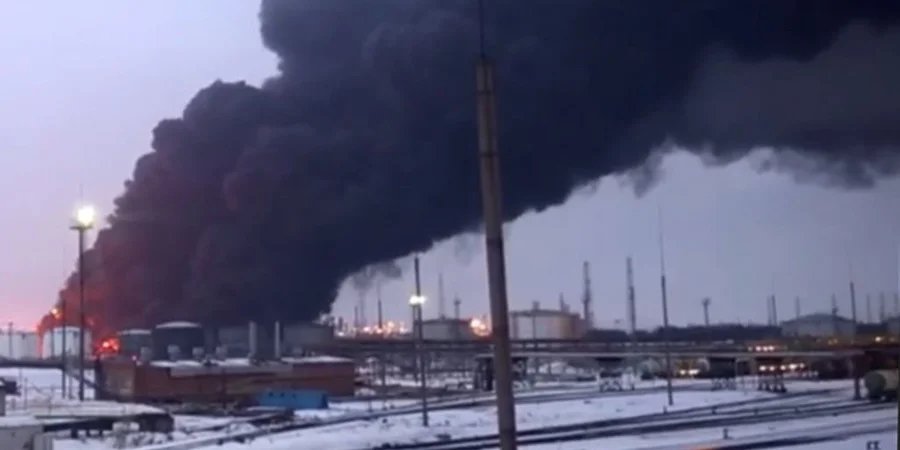
This incident is not the first time the plant has been targeted by drones; a similar occurrence took place in the summer of 2022, resulting in an explosion and fire. Ukrainian authorities have historically refrained from officially confirming their involvement in such attacks.
Overnight on March 13, at least 60 drones were sighted across seven Russian oblasts, with an additional seven spotted in the morning wave, as announced by Russia’s Defense Ministry. It marks the most extensive attack on Russian soil since World War II.
These drone waves follow a series of attacks on March 12, during which Russia encountered at least 25 drones across nine regions, striking at least two oil facilities.
Russia has claimed to have “intercepted and destroyed” 58 out of 60 attack drones in the overnight wave.
Strikes on oil refineries, vital to Russia’s revenue, have the potential to curtail the country’s gasoline and diesel output, leading to price increases. In response, Moscow imposed a six-month ban on gasoline exports effective March 1.
The military war may be swinging in our favor, but the information war continues.
Just as an army needs soldiers, so does a free society need its journalists to ensure that people have access to honest, trustworthy voices to understand the world around them.
For the past five years, The New Voice of Ukraine has been working tirelessly to push back against Russian narratives and defend democracy. But we cannot do it alone.
Please consider supporting us on Patreon for just $5 a month – your donation does directly to supporting journalists and ensuring that this front of the infowar says solid and defended.
Thank you.
Follow us on Twitter, Facebook and Google News
