

How EU leaders countered Orbán's opposition to Ukraine
 Read NV on Google
NV reporters witnessed the swift transformation of Ukraine's European future in Brussels, shifting from a gloomy morning outlook to a to an optimistic evening within a matter of hours on Dec. 14.
European Council President Charles Michel posted a brief, but long-awaited in Ukraine, message on social media, while in Brussels at a meeting of EU country leaders in the evening of Dec. 14. The text announced that Kyiv (along with Chișinău) had officially been given the “green light” to start negotiations for EU membership.
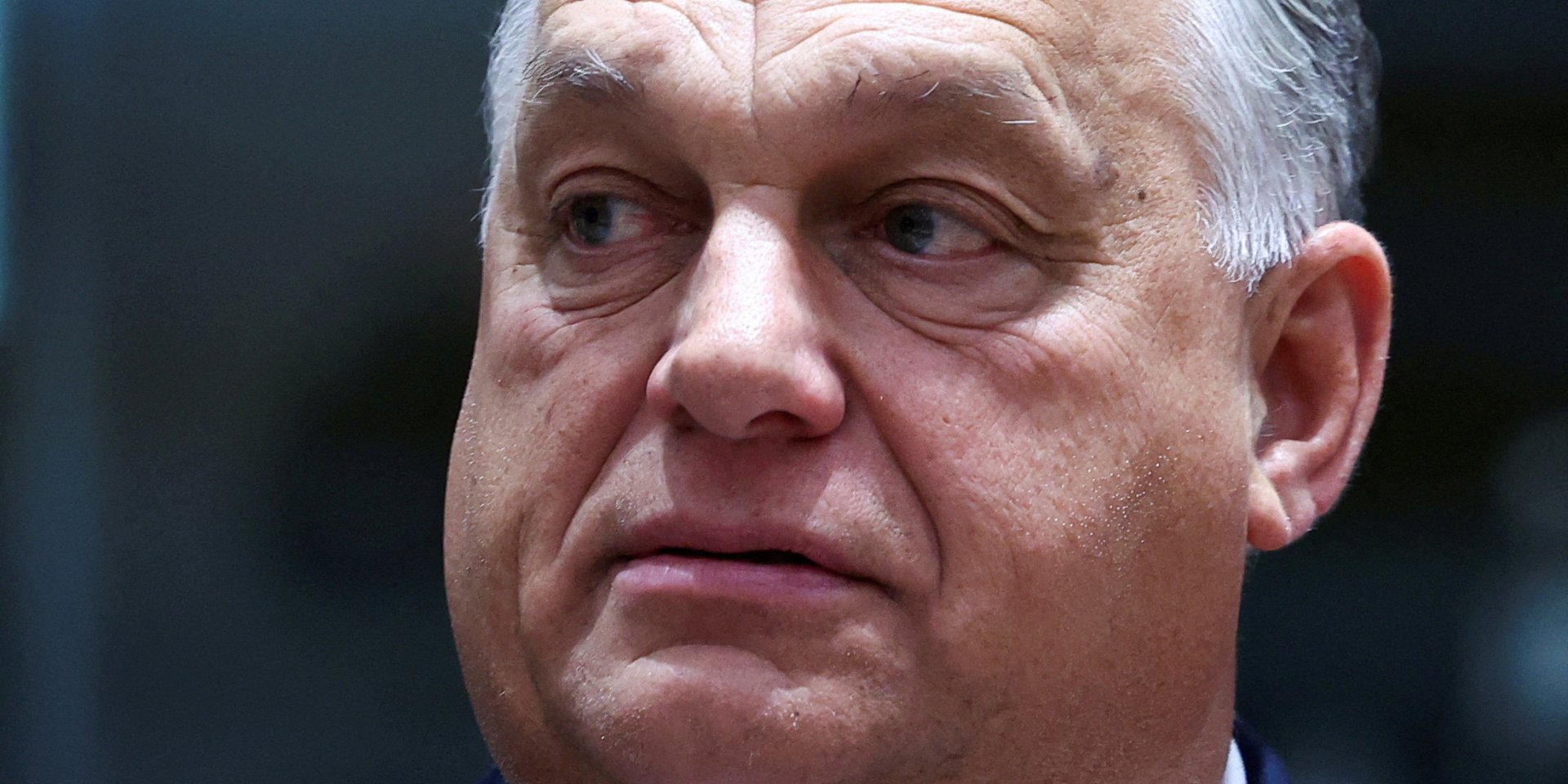
26 EU member countries supported this historic decision, despite tough and lengthy negotiations and threats from Hungarian Prime Minister Viktor Orbán to veto.
However, Orbán still managed to mar the celebration by blocking €50 billion in financial aid to Ukraine. Now, EU leaders are seeking a solution to this problem next year.
NV attended the summit in Brussels and witnessed what happened behind the scenes.
Mission: ‘to get along without Orbán’
As early as the morning of Dec. 14, European officials had little optimism, giving only a 20-30% chance that a decision in favor of Ukraine would be made.

European leaders with somber smiles told journalists they still held some hope for starting negotiations, before the summit.
“It's not just a war against Ukraine,” Vice-President of the European Commission Josep Borrell told journalists.
“It's about our security – we must support Ukraine as long as we can.”
Before the start of the summit, Orbán, in his typical blunt manner, declared that Ukraine had not met all seven conditions for beginning negotiations on EU membership, hence this issue would need to be revisited later.
Knowing his stance, world leaders with influence over Orbán met with him privately in turn.
In the morning, German Chancellor Olaf Scholz, French President Emmanuel Macron, and Charles Michel had breakfast with the head of the Hungarian government.
Then, Orban met with Italian Prime Minister Giorgia Meloni. Additionally, Orbán received a “gift” from the EU: nearly €11 billion in financing unblocked for Hungary, although he initially asked for €30 billion to be unfrozen.
On the day before the summit, NV's sources in the European Council confidentially revealed that the problem wasn't only Hungary. Austria and Slovenia had doubts about supporting Ukraine because they wanted Bosnia and Herzegovina to be invited to join the EU.
“This issue appeared at the last moment,” explained a representative of the European Council later.
“They didn't publicly talk about it before the summit, but everyone understood that if Ukraine was blocked because of this, Moldova would automatically fall under the same block, and there were no particular objections against this country”.
During an afternoon press conference on Dec. 14, European Parliament President Roberta Metsola commented on Orbán's statement that Ukraine had not met all seven criteria. She said that despite the difficult period, “Ukraine quickly adopted the necessary legislation and reforms.”
Ukrainian President Volodymyr Zelenskyy, who had planned to come to Brussels with his team, eventually addressed the leaders via video link. Some European leaders, including Charles Michel, dissuaded him from appearing at the summit, as NV later learned.
As the day progressed, attendees began to raise the stakes, saying that the work of the summit could be extended not only to Dec. 16. but even to Christmas, until all member countries made a decision on Ukraine and the EU budget.
The possibility of extending work to the holidays seemed entirely real, when staff information revealed that summit participants had a festive menu, including meat medallions and Christmas cake.
The temperature of debate was so high that state leaders, unable to agree on EU expansion after several hours of continuous discussions, began negotiating the bloc's budget, including the €50 billion for the Ukraine Facility. But they couldn't reach a compromise even here, – then the leaders' advisors took over the discussions.

The unexpected message from Charles Michel appeared on social media suddenly, closer to the evening.
It turned out that during the vote, Orbán left the room, and the remaining 26 EU country leaders made the decision without him. And they did it unanimously – as required. “It's not considered a violation, one could say he [Orbán] abstained,” noted a source in Michel's circle.
German Chancellor Olaf Scholz suggested Orbán leave.
“Scholz said, if you don't want to participate, you can leave,” the source noted, adding that this move was pre-planned.
One source in European Parliament explained that the U.S. also played a role in this decision. “
Orbán had a conversation with the U.S., he talked, among other things, about lifting sanctions against his country, this also had an impact,” said the EU official.
“Moreover, in recent days, Zelenskyy and his circle were conducting active negotiations with some leaders. The President of Ukraine was in constant telephone contact with Meloni, Michel, and [Polish Prime Minister] Tusk, and they were looking for a solution together.”
Following the successful outcome of negotiations with Ukraine, EU leaders continued their meeting, trying to find a compromise on the EU budget. The process lasted almost until three in the morning, after which Charles Michel emerged to inform journalists that no consensus was reached due to Orbán's veto.
“We will return to this issue at the beginning of the year at the EU summit after appropriate preparation,” added Michel.
This summit is likely to take place at the end of January.
"Orbán opposes not only aid to Ukraine but also the existing EU budget plan and its expansion,” said advisor to one of the European politicians.
“This is because various issues are at stake, including migration policy.”

EU leaders fundamentally agreed on providing financial assistance to Kyiv, however, and will work on options to resolve the issue in the coming weeks.
Ukraine would receive €1.5 billion from the amount allocated in 2023 under macro-financial assistance by the end of the year, said European Commission President Ursula von der Leyen at the concluding press conference. This will help Kyiv survive the period until receiving funds within the Ukraine Facility.
“There is secured money for Ukraine, especially since part of the funds are actually loans [referring to €33 billion in loans],” said a source in the European Council.
“They are considering how to allocate this money, possibly through bilateral agreements between governments. But they do not intend to leave Ukraine without funds.”
A recurring sentiment during the summit in Brussels was that “Ukraine is the bastion of Europe.”
“Believe me, Western politicians understand this perfectly,” concluded advisor to one of the European top-officials.
“No one is ready to fight with Russia, so they will support Ukraine.”
The military war may be swinging in our favor, but the information war continues.
Just as an army needs soldiers, so does a free society need its journalists to ensure that people have access to honest, trustworthy voices to understand the world around them.
For the past five years, The New Voice of Ukraine has been working tirelessly to push back against Russian narratives and defend democracy. But we cannot do it alone.
Please consider supporting us on Patreon for just $5 a month – your donation does directly to supporting journalists and ensuring that this front of the infowar says solid and defended.
Thank you.
Follow us on Twitter, Facebook and Google News
